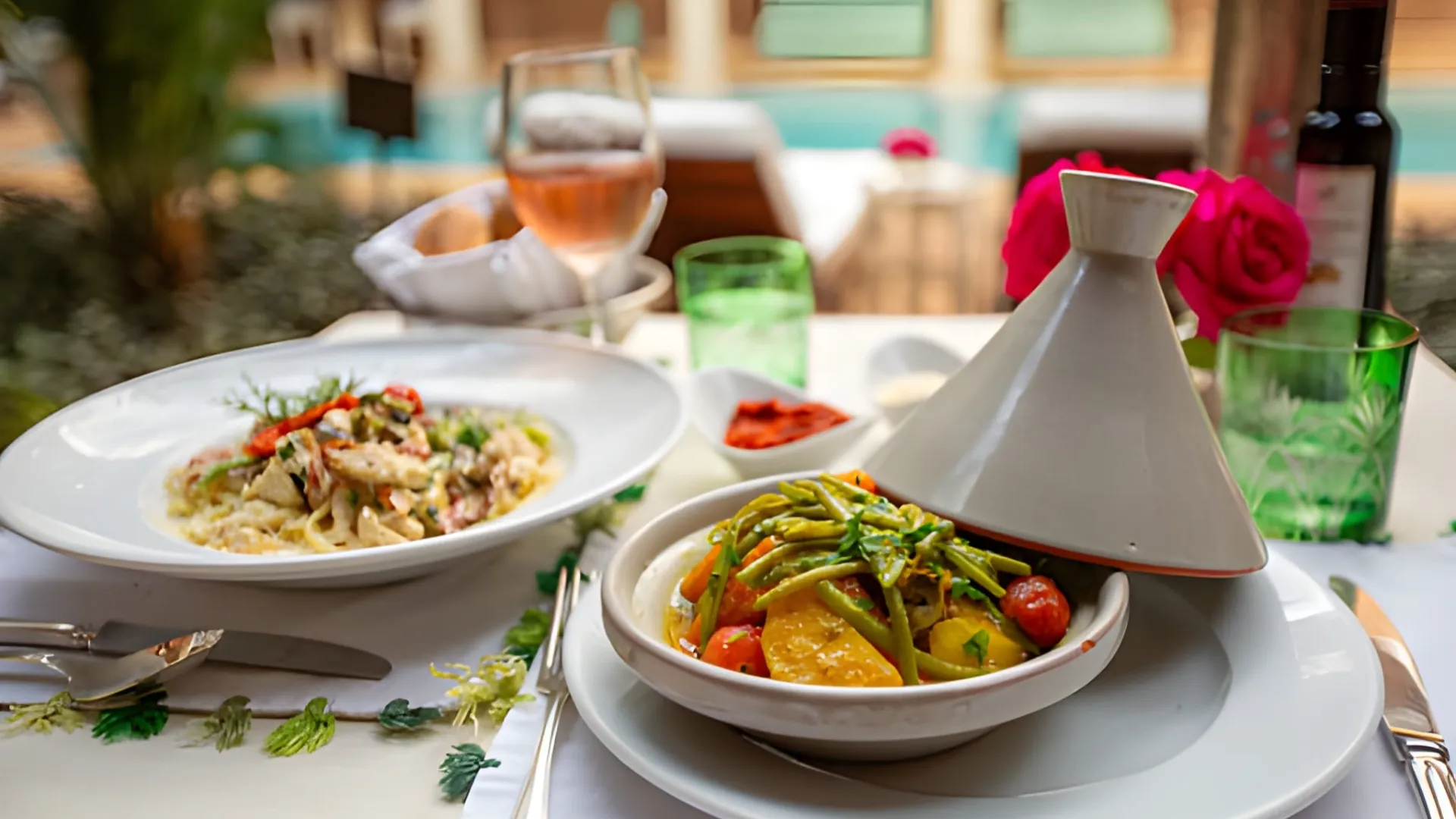
Imagine walking through the lively souks of Marrakech. The smell of exotic spices and fresh bread fills the air. As you explore Moroccan cuisine, you’ll find a mix of Berber, Arab-Islamic, and Mediterranean, African, and European tastes.
Try dishes like tagines, couscous, and harira to taste Morocco’s true flavors. For more, check out 25 traditional Moroccan dishes. They show the country’s rich culinary variety.
Key Takeaways
- Discover the unique flavors and cultural significance of Moroccan cuisine.
- Explore traditional Moroccan dishes like tagines, couscous, and harira.
- Learn about the cultural influences that shape Moroccan cuisine.
- Experience the rich culinary heritage of Morocco through its authentic flavors.
- Find inspiration for your next culinary adventure in Morocco.
Discover the Rich History of Moroccan Cuisine
Exploring Moroccan cuisine reveals a world shaped by its rich cultural heritage. It sits at the crossroads of Africa, Europe, and the Middle East. This makes Moroccan food a unique mix of different culinary traditions.
The Influence of Berber, Arab, and Mediterranean Cultures
Moroccan cuisine is a blend of Berber, Arab, and Mediterranean cultures. Berber traditions are seen in the use of local ingredients and cooking methods. Arab cuisine has brought spices and dishes that are now common in Moroccan cooking.
Mediterranean dietary habits are also a big part of Moroccan recipes. You’ll find olive oil, citrus fruits, and fresh vegetables in many dishes.
The ancient trade routes have also shaped Moroccan cuisine. Spices and ingredients from around the world have added to the flavors and aromas of traditional dishes.
Traditional Cooking Techniques Passed Down Through Generations
Traditional Moroccan cooking techniques have been passed down through generations. Each family has its own secret recipes and methods. Slow-cooking in tagines is a key technique, allowing flavors to meld and meat to become tender.
Clay pots, or “tagine” pots, are used for slow cooking. Preparing couscous involves steaming semolina flour. These techniques add to the unique flavors of Moroccan dishes and show the resourcefulness and creativity of Moroccan cooks.
| Ingredient | Cultural Influence | Usage in Moroccan Cuisine |
|---|---|---|
| Olive Oil | Mediterranean | Used extensively in cooking and dressings |
| Cumin | Arab | Added to tagines and couscous for flavor |
| Preserved Lemons | Berber | Used to add a salty, tangy flavor to dishes |
Must-Try Moroccan Dishes
Explore the heart of Moroccan food with these iconic dishes. They have won the hearts of food lovers everywhere. Moroccan food is a mix of Berber, Arab, and Mediterranean tastes. This mix creates a wide range of delicious dishes.
Tagine: A Flavor Explosion in Every Bite
The tagine is a popular Moroccan dish. It’s named after the earthenware pot it’s cooked in. This stew is made with meat, veggies, and dried fruits, all flavored with spices.
The slow cooking makes the flavors blend perfectly. This creates a rich and fulfilling meal.
To try a real tagine, go to one of the best Moroccan restaurants in Marrakech. Enjoy it in a traditional setting.
Couscous: The Beloved National Dish
Couscous is more than a dish in Morocco; it’s a symbol of unity. It’s made from semolina flour and steamed to perfection. It’s often served with veggies and meats.
On a Marrakech food tour, you can taste different couscous dishes. Each one has its own special flavors.
Harira: A Hearty Nourishment for All Occasions
Harira is a comforting soup. It’s made with tomatoes, lentils, chickpeas, and spices. It’s great for any time of day.
In Morocco, harira is often eaten as a starter or main dish. It’s a favorite during Ramadan.
For a real harira experience, go to a local restaurant in Marrakech. Enjoy this hearty soup in a lively setting.
| Dish | Main Ingredients | Where to Try |
|---|---|---|
| Tagine | Meat, Vegetables, Dried Fruits, Spices | Best Moroccan Restaurants in Marrakech |
| Couscous | Semolina Flour, Vegetables, Meats | During Marrakech Food Tours |
| Harira | Tomatoes, Lentils, Chickpeas, Spices | Local Restaurants in Marrakech |
The Importance of Spices in Moroccan Food
In Moroccan cooking, spices are more than just ingredients. They turn simple dishes into culinary wonders. Moroccan cuisine is rich with a variety of spices, each adding its own flavor and scent. Knowing about these spices is essential to truly experience Morocco’s authentic tastes.
Common Spices and Their Unique Flavors
Moroccan dishes rely on a mix of spices for their depth and warmth. Some key spices include:
- Cumin: Brings a warm, earthy taste.
- Coriander: Offers a sweet, citrusy flavor.
- Cinnamon: Adds a warm, sweet taste.
- Ginger: Adds a spicy, warming flavor.
- Turmeric: Gives dishes a vibrant yellow color and a slightly bitter, earthy taste.
- Paprika: Adds a smoky sweetness.
- Ras el hanout: A blend of spices that can include up to 30 different ingredients, providing a complex, slightly sweet flavor.
These spices are mixed in different ways to create the unique flavors.
How to Use Spices to Enhance Your Cooking
To add authentic Moroccan flavors to your cooking, it’s important to know how to use spices well. Here are some tips:
- Blend your spices: Making your own spice blends lets you tailor flavors to your liking.
- Toast your spices: Toasting spices can make their flavors and aromas stronger.
- Use spices at different stages: Adding spices at different cooking stages can create complex flavors.
- Balance your flavors: Make sure no spice overpowers the dish; balance is key in Moroccan cuisine.
By using these techniques, you can make your dishes richer with Morocco’s aromatic flavors.
Eating Etiquette in Morocco
To fully enjoy Moroccan cuisine, learning about eating etiquette is key. Mealtimes in Morocco are a chance to feel the local culture’s warmth and hospitality.
Dining Customs to Note
In Morocco, it’s important to know a few dining customs. First, always eat with your right hand. Using your left hand is seen as impolite. Also, be ready to share food from a communal dish, a common practice in traditional Moroccan dishes.
Wait for the host to invite you to start eating. They might offer you the best meat as a sign of respect. When you’re done, leaving a bit of food on your plate shows you were well-fed and the host provided enough.
The Significance of Sharing Meals
Sharing meals is central to Moroccan cuisine and culture. When you share a meal, you join a tradition that values community and hospitality. Meals are a time to bond with family and friends, showing generosity and respect.
In Morocco, mealtimes are special. Eating is not just about food; it’s about the company and conversations. Being invited to share a meal means you’re welcomed into the family or community, a big part of Moroccan culture.
| Dining Custom | Description |
|---|---|
| Eating with the Right Hand | Considered polite; using the left hand is generally frowned upon. |
| Sharing Food | Food is often served communally, and sharing is a significant part of the dining experience. |
| Waiting for the Host | It’s customary to wait for the host to start eating before you begin. |
By understanding and respecting these customs, you can improve your Moroccan cuisine experience. You’ll also make meaningful connections with the people you meet.
Street Food: A Taste of Everyday Moroccan Life
Street food in Morocco is more than a meal; it’s a cultural experience. As you wander through bustling streets and markets, you’ll find a world of flavors. These flavors are both familiar and exotic.
The appeal of Moroccan street food lies in its rich tastes and the joy of sharing meals. In cities like Marrakech, Fez, and Rabat, the street food scene is lively. It offers a variety of dishes for every taste.
Popular Street Food Items You Can’t Miss
Don’t miss out on grilled meats, like marinated lamb or chicken skewers. Also, try Msemen, a Moroccan pancake that’s both crispy and soft. And don’t forget Harira, a soup made with tomatoes, lentils, and chickpeas.
Other must-try items include B’stilla, a savory pie with layers of pastry, meat, onions, and spices. And Ma’kouda, potato fritters that are crispy outside and fluffy inside. These dishes offer a taste of Morocco’s rich culinary heritage.
How Street Food Reflects Moroccan Culture
Street food is a key part of Moroccan culture. It reflects the country’s history, geography, and values. The variety of dishes on the streets shows Morocco’s role as a crossroads between Africa, Europe, and the Arab world.
Food lovers say Moroccan street food is a journey through diverse landscapes and cultures. Sharing street food brings people together, creating a sense of community.
“The street food in Morocco is not just about sustenance; it’s about the experience, the culture, and the people.”
Exploring Moroccan street food is an adventure into the local culture. Whether on a guided food tour in Marrakech or at a local market, the experience is unforgettable.
Satisfy Your Sweet Tooth with Moroccan Desserts
Explore the sweet side of Morocco, where treats like Baklava and more await. Moroccan desserts are known for their rich flavors and aromas. You’ll find a mix of traditional and modern sweets.
Traditional Sweets: Baklava and Beyond
Moroccan desserts are perfect for those with a sweet tooth. Baklava, a pastry with layers of dough, nuts, and honey, is loved by all. Other sweets include:
- Ma’amoul: A shortbread-like cookie filled with dates or nuts.
- Ghoriba: A dense, sweet cookie often flavored with nuts or coconut.
- Mhancha: A pastry similar to Baklava, made with layers of dough, nuts, and honey.
These desserts are enjoyed during special occasions, highlighting the role of sweets in Moroccan culture.
| Dessert | Description | Main Ingredients |
|---|---|---|
| Baklava | Layered phyllo pastry with nuts and honey | Phyllo dough, nuts, honey |
| Ma’amoul | Shortbread-like cookie filled with dates or nuts | Semolina flour, dates or nuts, butter |
| Ghoriba | Dense, sweet cookie often flavored with nuts or coconut | Flour, sugar, nuts or coconut, butter |
The Role of Mint Tea in Moroccan Hospitality
Mint tea is key in Moroccan hospitality. Mint tea, made with green tea, fresh mint, and sugar, welcomes guests. The art of pouring tea from a height creates a frothy top.
Mint tea is more than a drink; it symbolizes friendship and welcome. In a Moroccan home, expect mint tea as a sign of respect.
Exploring Moroccan Cuisine Beyond the Plate
To truly experience Moroccan cuisine, look beyond the plate. It’s about understanding the traditions, techniques, and ingredients that make it unique.
Moroccan Cooking Classes in the U.S.
If you’re in the United States and eager to dive deeper into Moroccan cuisine, consider enrolling in a Moroccan cooking class. Many culinary schools and cooking institutes now offer classes focused on international cuisines, including Moroccan. These classes are a fantastic way to learn about Moroccan food recipes and cooking techniques from experienced chefs.
Some of the top culinary schools that offer Moroccan cooking classes include the International Culinary Center in New York and the Cooking School in Los Angeles. These classes not only teach you how to prepare traditional Moroccan dishes but also provide insight into the cultural significance of food in Moroccan society.
Where to Find Authentic Ingredients
Finding authentic ingredients is key for preparing genuine Moroccan dishes. While some ingredients like olive oil, garlic, and ginger are easily available in most supermarkets, others such as preserved lemons, ras el hanout, and specific types of couscous might require a visit to a specialty store or an online retailer that ships to the U.S.
For those looking for the best Moroccan restaurants or ingredients, cities with a large Middle Eastern or North African community often have stores that carry a wide range of Moroccan staples. Online retailers are also a great resource, providing everything from spices to cookware that’s ideal for preparing Moroccan food recipes.
When shopping for ingredients, remember that the quality of your dishes depends on the freshness and authenticity of what you use. Whether you’re making a hearty tagine or a simple salad, using the right ingredients will transport your taste buds to the vibrant streets of Marrakech or the coastal towns of Morocco.
The Role of Markets in Moroccan Food Culture
Visiting a Moroccan market, or Souk, is an immersive experience. It showcases the rich flavors and traditions of the country’s food culture. As you wander through the vibrant stalls, you’re surrounded by the sights, sounds, and aromas of Moroccan spices and fresh produce.
Visiting a Souk: A Culinary Adventure
A Souk is more than just a marketplace; it’s a sensory journey. It invites you to explore the depths of Moroccan cuisine. You’ll discover an array of traditional Moroccan dishes and ingredients, from succulent meats to fragrant spices.
For those interested in Marrakech food tours, a visit to a Souk is essential. It offers a glimpse into the city’s culinary soul.
The atmosphere is lively, with vendors calling out to passersby. The scent of freshly baked bread wafts through the air. As you explore the stalls, you’ll find a variety of goods, including handmade crafts and local delicacies.
Fresh Produce and Local Products
The markets are a treasure trove of fresh produce. They feature seasonal fruits and vegetables used in traditional Moroccan cooking. You’ll also find local products, such as artisanal cheeses, olives, and spices, which are integral to the country’s culinary identity.
| Product | Description | Typical Use |
|---|---|---|
| Ras el hanout | A blend of spices that can include over 30 different ingredients | Used to flavor tagines and other traditional dishes |
| Preserved Lemons | Lemons pickled in a brine of salt, water, and spices | Adds a salty, tangy flavor to tagines and salads |
| Argan Oil | A luxurious oil extracted from the argan tree | Used in cooking and as a finishing oil for dishes |
By exploring the markets of Morocco, you’ll gain a deeper understanding of the country’s food culture. You’ll see the importance of these markets in shaping its culinary traditions.
Pairing Moroccan Cuisine with Drinks
In Moroccan culture, drinks are key to enjoying traditional dishes. The right drink can make meals even better. Whether it’s a hearty tagine or sweet pastries, the right drink can bring out the best flavors.
Ideal Wines and Beverages for Moroccan Dishes
Choosing the right drink for Moroccan food is important. For popular Moroccan dishes like tagine, a dry rosé or Pinot Noir works well. These wines match the tagine’s rich, spicy taste.
For couscous and other grain dishes, mint tea or fruity herbal infusions are great. They refresh your palate between bites.
If you don’t drink alcohol, Atay (Moroccan mint tea) is perfect with most dishes. It’s refreshing and pairs well with spicy foods. Orange juice is also good, contrasting with savory dishes like harira.
Unconventional Pairings to Try
For those who love trying new things, there are exciting drink pairings. Try a spicy lamb tagine with ginger beer. The ginger beer’s spicy kick matches the lamb’s bold flavors.
Another unique pairing is baklava with sweet, creamy masala chai. The chai’s spices, like cinnamon and cardamom, match the baklava’s warm flavors. It’s a great dessert choice.
Trying different drink pairings can make you appreciate Moroccan cuisine more. Whether you choose traditional or unique pairings, finding the right drink enhances the flavors of Morocco.
Transform Your Kitchen with Moroccan Recipes
Now that you’ve learned about Moroccan cuisine, it’s time to try it out at home. With a few simple ingredients and traditional recipes, you can make dishes that feel like a trip to Morocco.
Simple Recipes to Get Started
Start with dishes like tagine or couscous, which are easy to make. Look for recipes that use common spices and ingredients. This will help you get the full flavor of Moroccan cooking. You can find many Moroccan recipes online or in cookbooks about Mediterranean food.
Inviting Friends: Hosting a Moroccan Dinner Party
Hosting a dinner party is a great way to share your love for Moroccan food with friends. Decorate with vibrant colors and traditional textiles to create a warm atmosphere. Serve a variety of dishes, including appetizers, main courses, and desserts. Don’t forget to offer refreshing mint tea. With these tips, you’ll host a memorable Moroccan dinner party that your guests will love.